
Eine Auswahl, die viel früher beginnt
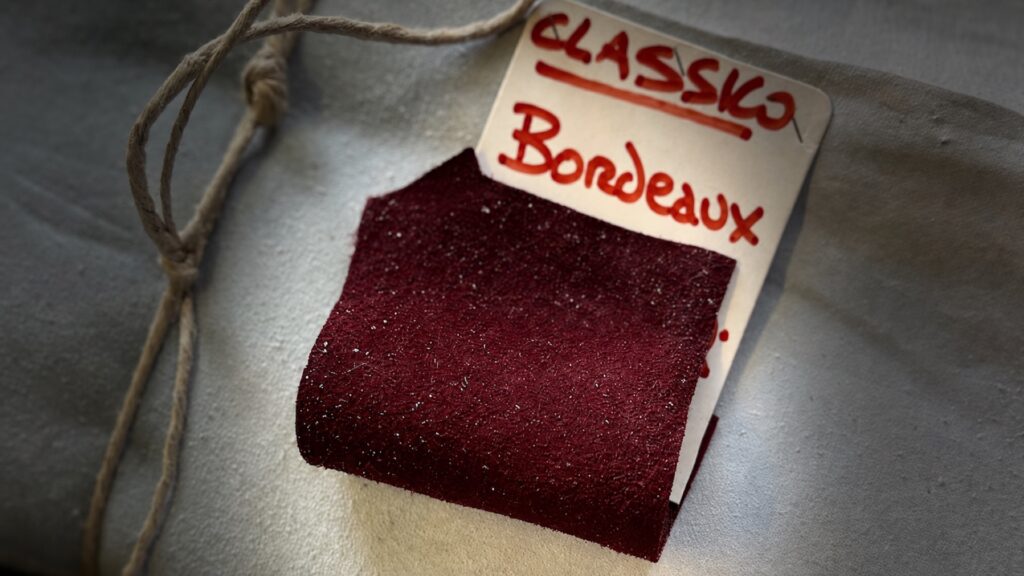
Jeder Restelli-Handschuh entsteht aus einer Wahl, die das Leder betrifft, noch bevor es zum Handschuh wird. Wir verarbeiten edle Leder wie Nappaleder mit feinster Körnung; Peccary-Leder, selten und kostbar, erkennbar an seiner Dreiporen-Struktur und einer Wärmekapazität, die es im Winter warm macht, ohne je stickig zu wirken; Hirschleder, mit unverwechselbarer geaderter Körnung, robust und gleichzeitig weich im Griff; Schafleder, dessen Vlies auf natürliche Weise Tausende kleiner isolierender Luftkammern schafft. Jedes Leder hat seine eigene inhärente Variabilität, die Auge und Erfahrung erfordert, um erkannt und zur Geltung gebracht zu werden, nicht nur ausgewählt.
Diese Phase, unsichtbar für den, der den fertigen Handschuh trägt, entscheidet über alles Weitere: Der Erfolg einer perfekten Verarbeitung hängt eng mit einer überlegten und sorgfältigen Materialwahl zusammen.
Die Verarbeitung, die man sieht, und die, die man spürt
Nach der Wahl des Leders kommt die erfahrene Hand unserer Handwerkerinnen und Handwerker zum Einsatz. Die Handnaht bleibt die höchste Verarbeitung, Garantie für maximale Passform und Langlebigkeit. Die Piquénaht schafft eine feine, fast unsichtbare Linie, gedacht für Fahrmodelle, bei denen Eleganz sich auch in Details bemisst, die auf den ersten Blick nicht auffallen. Die sichtbare maschinengenähte Sattlernaht verleiht hingegen den sportlicheren Modellen Charakter und Robustheit. Und dann gibt es die handgearbeiteten Häkeleinsätze, vollständig häkelnd auf dem Handrücken der Fahrhandschuhe verarbeitet: Sie garantieren Atmungsaktivität auf langen Strecken, ohne auf einen unverwechselbaren Stil zu verzichten.
Jede Technik existiert, mit anderen Worten, aus einem präzisen funktionalen Grund. Die schneiderische Sorgfalt, die sie begleitet, ist das, was eine dekorative Naht von einer Naht unterscheidet, die hält.
Die Wärme, die eine Saison dauert, nicht einen Tag
Der Teil, den man nicht sieht, den man aber bei jeder Geste spürt, ist das Futter. Kaschmir schafft eine thermische Isolierung, die Wärme einfängt, ohne die Hand zu beschweren. Opossum, mit seiner doppellagigen Haarstruktur, bietet eine der höchsten Isolierungen, die die Natur bieten kann. Lammfell vereint die Widerstandsfähigkeit des Leders mit der Fähigkeit der Wolle, Feuchtigkeit aufzunehmen, ohne sie je an die Haut abzugeben, und reguliert so auf natürliche Weise Wärme und Transpiration. Fleece, technisch und leicht, leitet den Schweiß in den sportlicheren Modellen von der Haut weg.
Es sind unterschiedliche Materialien für unterschiedliche Bedürfnisse, jedes ausgewählt nicht für seinen Namen, sondern für das, was es demjenigen, der es trägt, wirklich zurückgibt.
Ein Prozess, keine Phase
Leder, Verarbeitung und Futter sind keine getrennten Schritte: Sie sind derselbe Prozess, betrachtet aus drei verschiedenen Blickwinkeln. Genau dieser Weg, mit derselben Aufmerksamkeit auf jedes Modell angewendet, macht die Vielfalt der Restelli-Produktion möglich: die handwerklichen italienischen Damenhandschuhe, gedacht für die alltägliche Eleganz; die Herrenhandschuhe, bei denen die Schlichtheit des Leders für sich spricht; die Fahrhandschuhe, bei denen jede Naht einem Bedürfnis nach Empfindlichkeit am Lenkrad entspricht; die Skihandschuhe, bei denen Leder und Futter gemeinsam gegen die Kälte arbeiten.
Es ist eine Geschichte, die in Mailand seit mehr als einem Jahrhundert andauert, und die weiterhin von denen erzählt wird, die sie jeden Tag leben.


